In a market where competencies matter, the winner will not be the one who has them, but the one who can prove them.
The European labour market is increasingly built around verifiable competencies. Micro-credentials make it possible to close skills gaps faster, yet their adoption remains uneven, even though the infrastructure is already in place. Companies, HR professionals, and education providers now have a clear opportunity to integrate them into their processes and benefit from faster skills verification, comparability based on EU standards, and more efficient digital credential management.
The push to strengthen the competitiveness of the European economy is accelerating the shift toward a skills-based employment model. Employers today care less about formal titles and more about what people can actually do, and how quickly skills gaps can be addressed without long delays or disruption to operations. As traditional education programmes often cannot respond fast enough, micro-credentials are moving to the forefront.
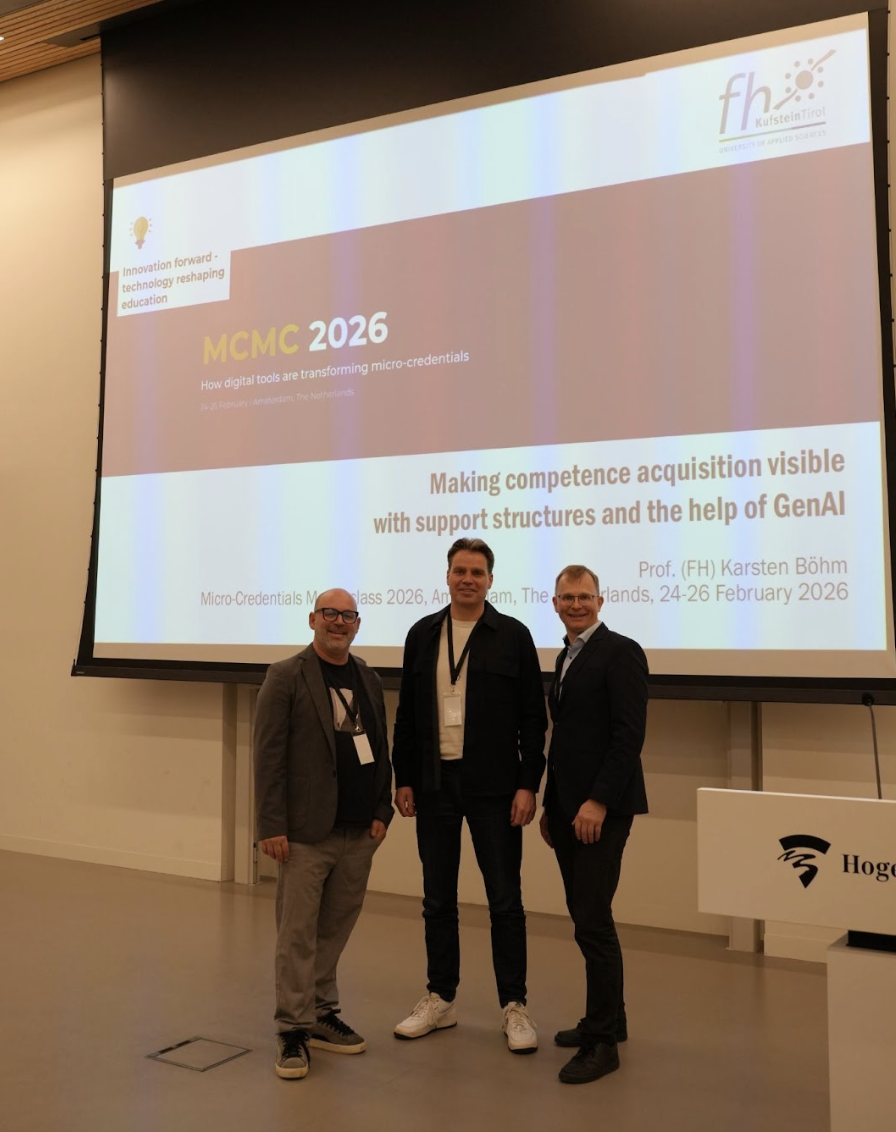
Their role and future were discussed at the February MicroCredentials Masterclass (MCMC) in Amsterdam, where Velocert (by Netis) participated as a lead sponsor. The conclusion of the three-day discussions between education providers, policymakers, and practitioners was clear: micro-credentials and other verifiable digital credentials enable the continuous accumulation and credible demonstration of skills throughout a career. As such, they are becoming a key building block of a more flexible labour market.
At the same time, adoption is still slowed by differences between countries and the early stage of practical implementation. Even so, organisations already moving in this direction understand that gradual testing and integration is part of a long-term shift toward an environment where this will no longer be optional, but expected.

Why does digitalisation in education begin with micro-credentials?
Micro-credentials were created in response to labour market needs, which is why they are designed from the start as digital, portable, and verifiable. The idea is simple: individuals can use them across different contexts, while employers can quickly understand what someone knows, how deeply, and how those skills were assessed.
The European approach supports a wide range of issuers, from universities and vocational and lifelong learning institutions to other training providers, as long as learning outcomes are clearly defined and embedded in a quality assurance system. The framework is based on the European Learning Model (ELM), which standardises how learning achievements are described, and the ESCO classification, which ensures a shared language for skills, qualifications, and occupations.
The biggest differences appear at the national level. The EU has set a common direction, but it has not defined a single model for who can issue micro-credentials.
In some countries, such as Slovenia, micro-credentials are currently positioned mainly within higher education. This means that only accredited higher education institutions can formally issue them, while companies contribute as partners in developing content. With expected legislative changes, this is likely to open up to a broader range of providers.
In contrast, several countries have already taken a more open approach. In neighbouring Croatia, micro-credentials have become an established part of adult education, with thousands of programmes approved and delivered by a wide range of providers. Similar developments can be seen in countries such as the Netherlands and Ireland, where different types of organisations are actively issuing micro-credentials.

A similar level of fragmentation can be seen in digital infrastructure. In the Netherlands, SURF plays a central role through its national edubadges platform, which currently relies on a different standard. In Poland, a national ecosystem is being developed around the microcredentials.pl initiative. In many other countries, education providers are largely left to market-driven solutions.
It is also important to recognise that not everything digital is automatically verifiable. PDF certificates and digital badges are widely used, but they are often tied to specific platforms. Their value therefore depends on the credibility of the issuer or system, rather than on a standardised, independently verifiable format.
From “digital badges” to legally valid credentials
This is where the European Digital Credentials (EDC) framework introduces a meaningful shift. It enables digitally signed credentials with built-in verification. A credential is no longer just a file, but a trusted, portable record that can be verified regardless of where it is used.
In practice, this creates a simple but powerful flow: an organisation issues a standardised credential, an individual stores and shares it via a digital wallet, and an employer can verify it within seconds.
EDC is already connected to the Europass digital wallet, which, in addition to its original role as a CV tool, allows users to store and verify credentials. It is becoming the first widely used European infrastructure for managing competencies.
Micro-credentials are just the most visible starting point. The same logic applies to diplomas, enrolment certificates, and other types of credentials. With the rollout of the European Digital Identity Wallet (EUDI), this approach will extend further into other areas. The key point remains: the infrastructure for verifiable digital credentials already exists and is expanding.
The infrastructure is in place. Now comes adoption.
The technological foundation for digital, verifiable credentials is already working in practice. Many organisations are issuing credentials to their learners, who store them in digital wallets, while employers and other institutions can verify them in real time. For others, this is no longer a question of if, but when, if they want to stay competitive.
Organisations will need to gradually adapt their systems, not only to support employee development, but also to enable faster and more efficient hiring across a broader, often international, market. Micro-credentials and other digital credentials provide better visibility into skills and enable more effective workforce management, while giving individuals a portable, verifiable, and lasting record of their knowledge.
Digital credentials create new value: skills become understandable, comparable, and verifiable beyond national boundaries. Employers will play a central role by guiding employees toward targeted learning and using it to continuously strengthen and validate team capabilities.
Regardless of location, the labour market is becoming increasingly global. Organisations that want to recruit internationally, verify credentials more efficiently, or systematically develop their workforce will need to align with the standards that are already taking shape.
This article was originally published in Finance, Slovenia’s leading business and financial daily, focused on economic trends, markets, and corporate developments.